Blog Archives

Imaginary Friend (2024) Movie Review!
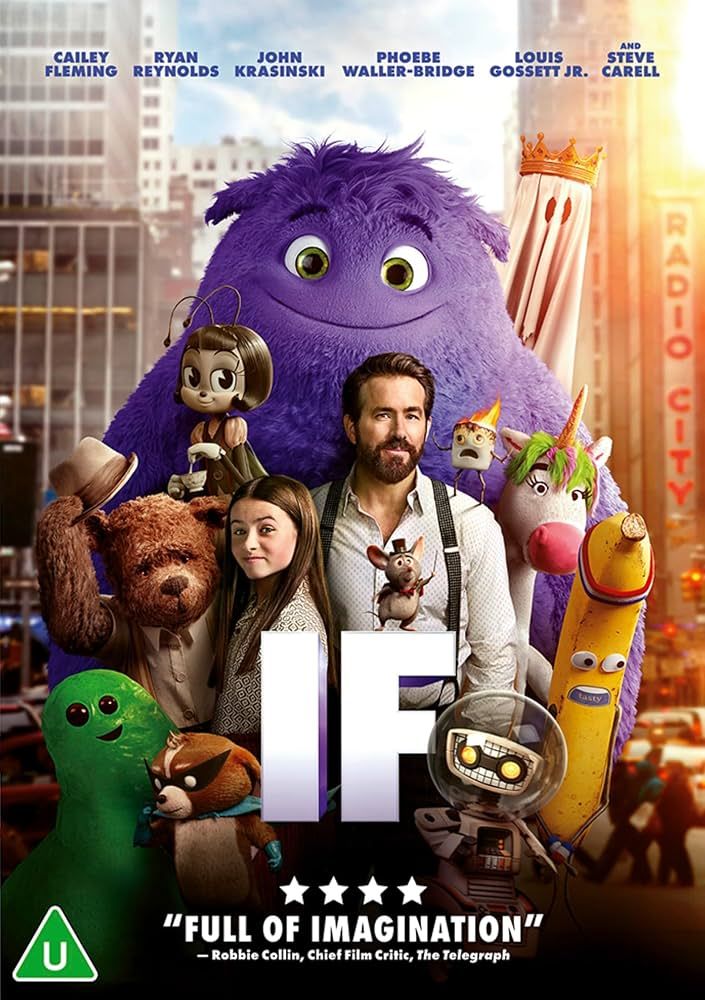
Recently, we decided to watch John Krasinski’s Imaginary Friend, or If for short. I don’t watch trailers, so I didn’t really know what to expect—all I could think about was Foster’s Home for Imaginary Friends. This movie ended up being something truly special to me.
Spoilers: I try my best not to spoil the film. Though, some parts are hard not to discuss. So, while I hint at spoilers, I try not to blatantly spoil the ending.
If is all about childhood innocence, remaining positive in our darkest hours, and never abandoning who you are. These are messages I think most adults would do well to remember. The movie stars Bea, a young girl who has lost her mother and is now watching her dad’s health deteriorate throughout the course of the film. It’s Bea and her father’s relationship (John Krasinski) that helps tie all the movie’s themes together.
Her dad spends most of the movie in the hospital needing surgery. He tries to stay in high spirits throughout the film with his magic tricks, silly dances, and downplaying his condition. Bea, who is trying to act like an adult to offset her dad’s childish behavior, is constantly telling him to grow up or that life doesn’t have to be fun and wacky all the time. However, despite his condition worsening and Bea’s constant pressure for him to drop the happy dad act, he refuses.
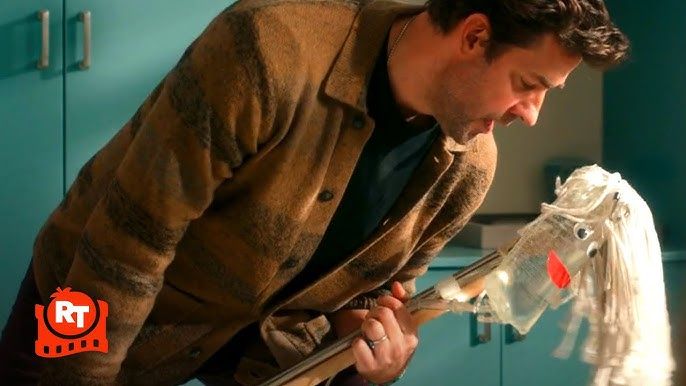
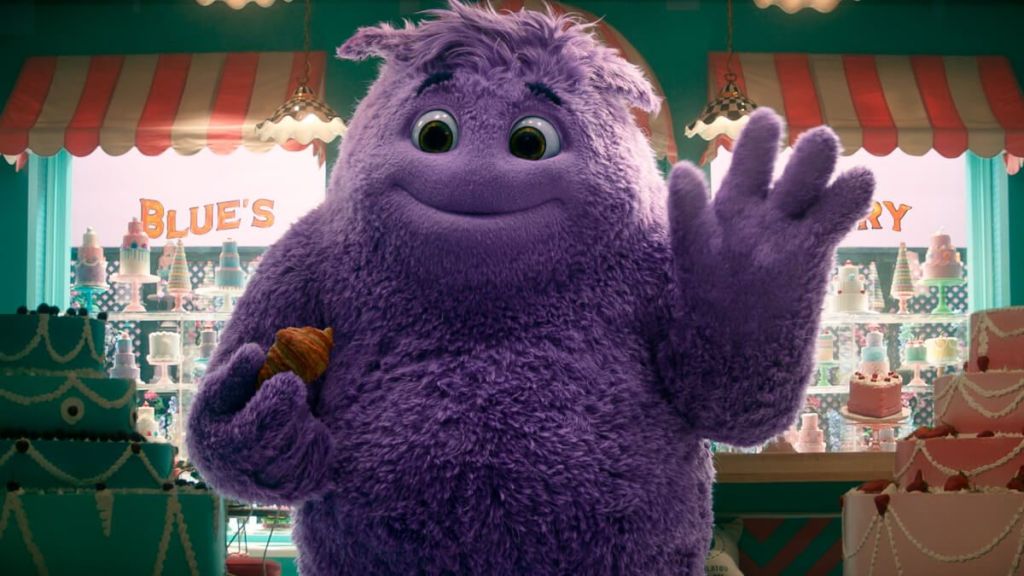
Throughout the film, Bea resists his childish nature. I think she was trying to act strong and brave, having gone through this with her mom already. The fact that she’s twelve means she’s at that age where she desperately wants to be viewed as an adult. Then, when she meets Cal (Ryan Reynolds), Blue (Steve Carell), and Blossom (Phoebe Waller-Bridge), she starts to let her guard down.
She learns that imaginary friends have been forgotten, and they all live in a mysterious place called Memory Lane. Memory Lane was my favorite scene in the movie. We’re exposed to several IFs, most voiced by incredible actors like Brad Cooper as an ice cube and George Clooney as a spaceman, among many others. Memory Lane is constantly changing to fit the needs of the IFs and Bea’s imagination. It’s a truly wonderful place. I would have liked to revisit it, but it didn’t overstay its welcome and maintained an air of mysticism.

The core plot follows Bea and Cal teaming up to try and get the other IFs adopted—which they fail at. This leads to their epiphany: why not try to find the IFs’ original kids? This leads to some of the most beautiful moments in the movie. Blossom sharing a dance with her child, who is now an adult. Blue reconnecting with his child, also grown up, just in time to calm him down for his big meeting. And of course, Bea finally getting to embrace her own IF.
I view the adults making contact with their IFs as a metaphor for reconnecting with their inner child. Each character has been beaten down or just worn out from the everyday motions of life. When Blossom shares a dance with her child, we had discovered that her child had given up on their dreams of being a dancer because she was “too tall.” When she shares that dance with Blossom, she gets to—for the first time in who knows how long—just dance like she did when she was a kid.
When Blue finds his adult seconds before he has to present in front of his bosses, his adult is stressed and no longer able to calm himself down. However, when Blue touches his shoulder, we see a calming aura wash over Blue’s adult. It’s implied he does well in his presentation.
Finally, Bea finds her IF. This is a sweet and powerful moment at the film’s finale. All movie long, Bea was trying to be an adult, never worrying about herself. She was either trying to be strong for her dad, be there for the other kid in the hospital, or solve all the IFs’ problems—never really thinking about herself. Seeing her IF lets her be a kid again. It lets her embrace that side of herself that was vulnerable, that was naive, that was free.
I’m not sure if the timeline was explicitly explained in the movie, but it’s implied that she needed her IF in the past when life got hard or scary. I’m not certain if it was ever explicitly stated that this was when her mom was in the hospital, but now that her dad is in the hospital, she’s able to see all the IFs again.
If is a powerful and beautiful movie. It encourages us to never lose our sense of wonder or sense of self—that growing up doesn’t have to be scary or change who you are at your core. Bea learned this firsthand. She tried to be an adult and take things seriously when things looked bad, but the IFs and her dad constantly encouraged her to be herself and just live life. It’s a message I think would do us all good to hear.
I give If an 8 out of 10. Thank you so much for reading. Have a great day.


 Da_Hubbz